
The week in ConWatch: Regrettably, it's Complicated
If only the real world were as simple as the Teutonic Imaginary's.

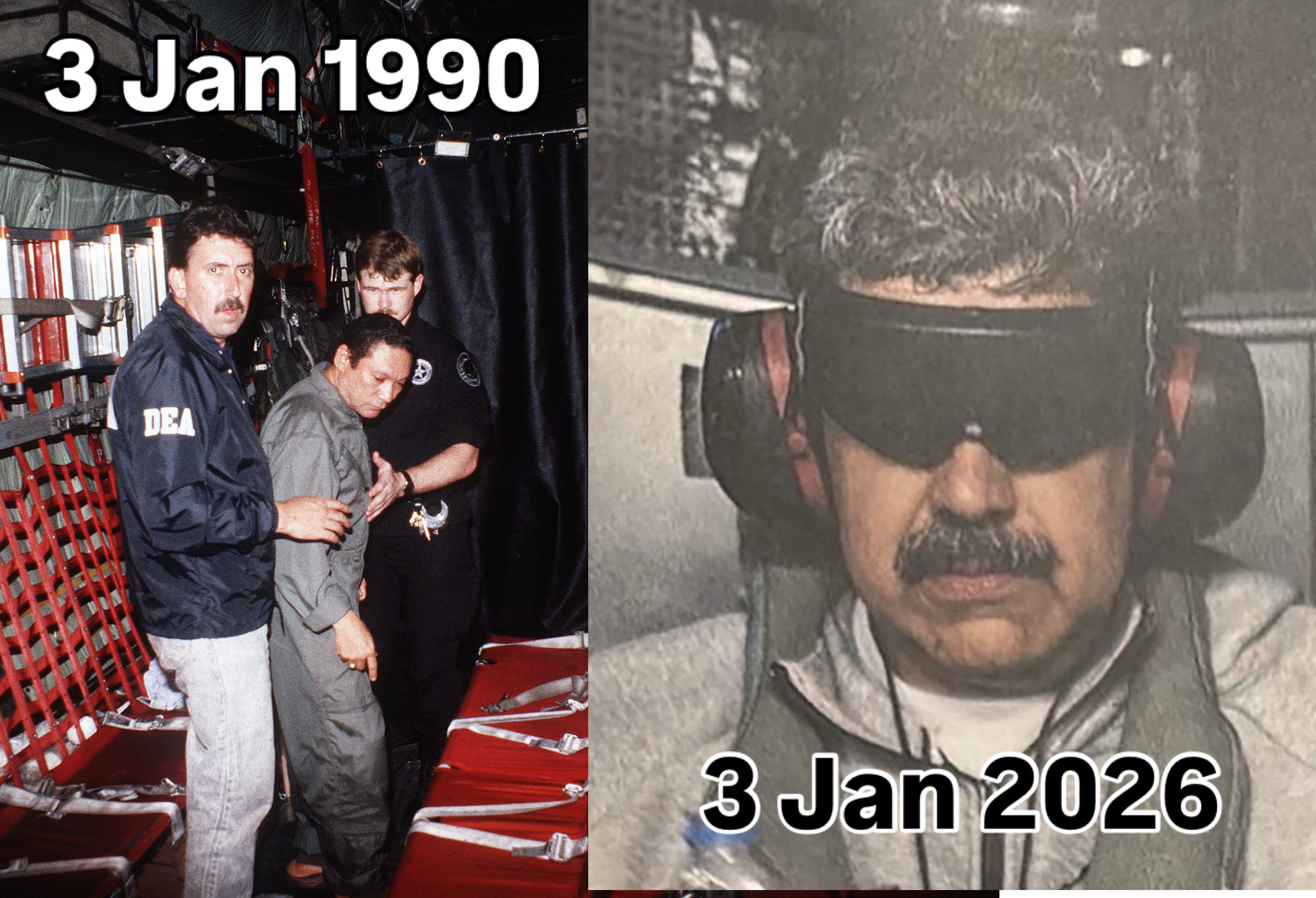
It’s a bad time for the Federal Republic of Germany. The Berlin Wall falling and West Germany taking over East Germany—the Cold War apparently won without a shot fired—was promised to be the end of history.
The future was supposed to be a foreclosed one. The only thing left to do was reap endless profits from building factories for the Chinese, selling washing machines to the Croatians, and exporting cars to everyone else.
In this future, there would be no need to choose between Russian gas and avoiding climate change. Political decisions could be made by centrist consensus, with little regard for their implications.
Regrettably, gravity returned to world order and the drek started falling back to earth. It was a fun trip, but the come-down has been rough, and the sage tea doesn’t seem to be working.
Bummer.
It’s little wonder that most of German Officialdom is woefully unprepared for the world as it is. It’s really, like, “complex,” you know?
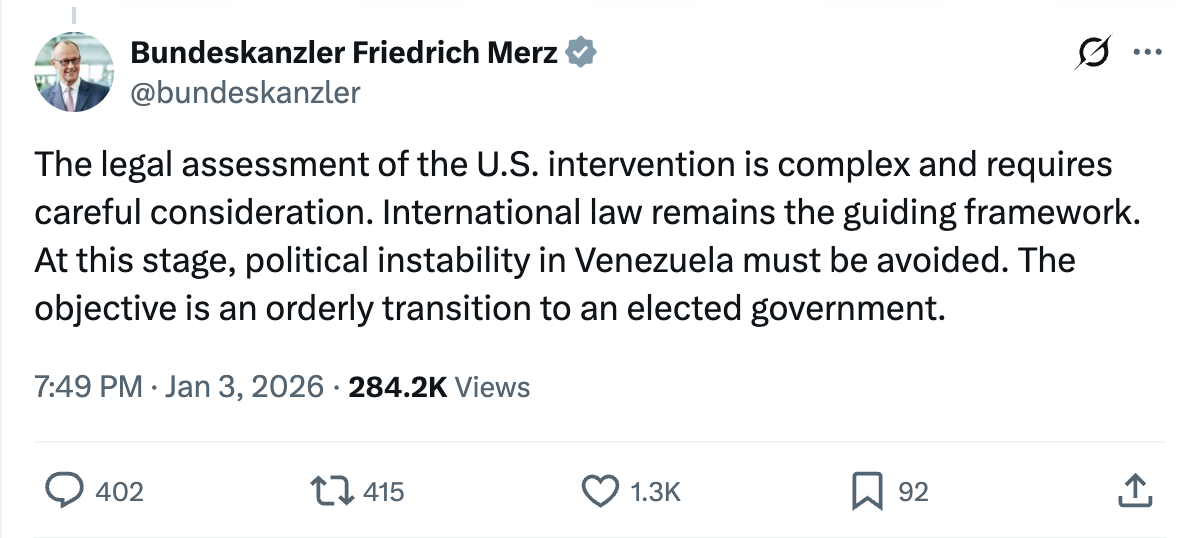
Adhering to international law wasn’t meant to be like this. It was meant to be easy. It was meant to be black and white. It was meant to clearly demarcate the good guys, which is us here, from the bad guys, which is them over there—absolving us of our historic badness along the way.
That’s what they invented the UN for.
In such an uncertain geopolitical environment, the safest thing to do is throw up your hands and say, “Hey, it’s complicated!”
Fortunately, when it comes to all the things that are complicated, German Officialdom is at least consistent—and consistently careful in its consideration of just how complicated all the things are.
Last we checked, Germany is still—one government transition later—“studying” whether the Rome Statute and its own Basic Law really have to take precedent over the myth of Staatsräson. Frankly, what good is a constitution being a mere pseudo one if you can’t fudge it when cosmic delusions about historical responsibility seduce you to?
This bodes poorly for Denmark. One of these days, when it gets indicted in a New York federal court for polar-terrorism or Mercator trafficking or whatever so the “very long arm of American justice” can give Greenland a reacharound, you can be sure that Germany will respond swiftly with the careful consideration that such an act duly deserves.
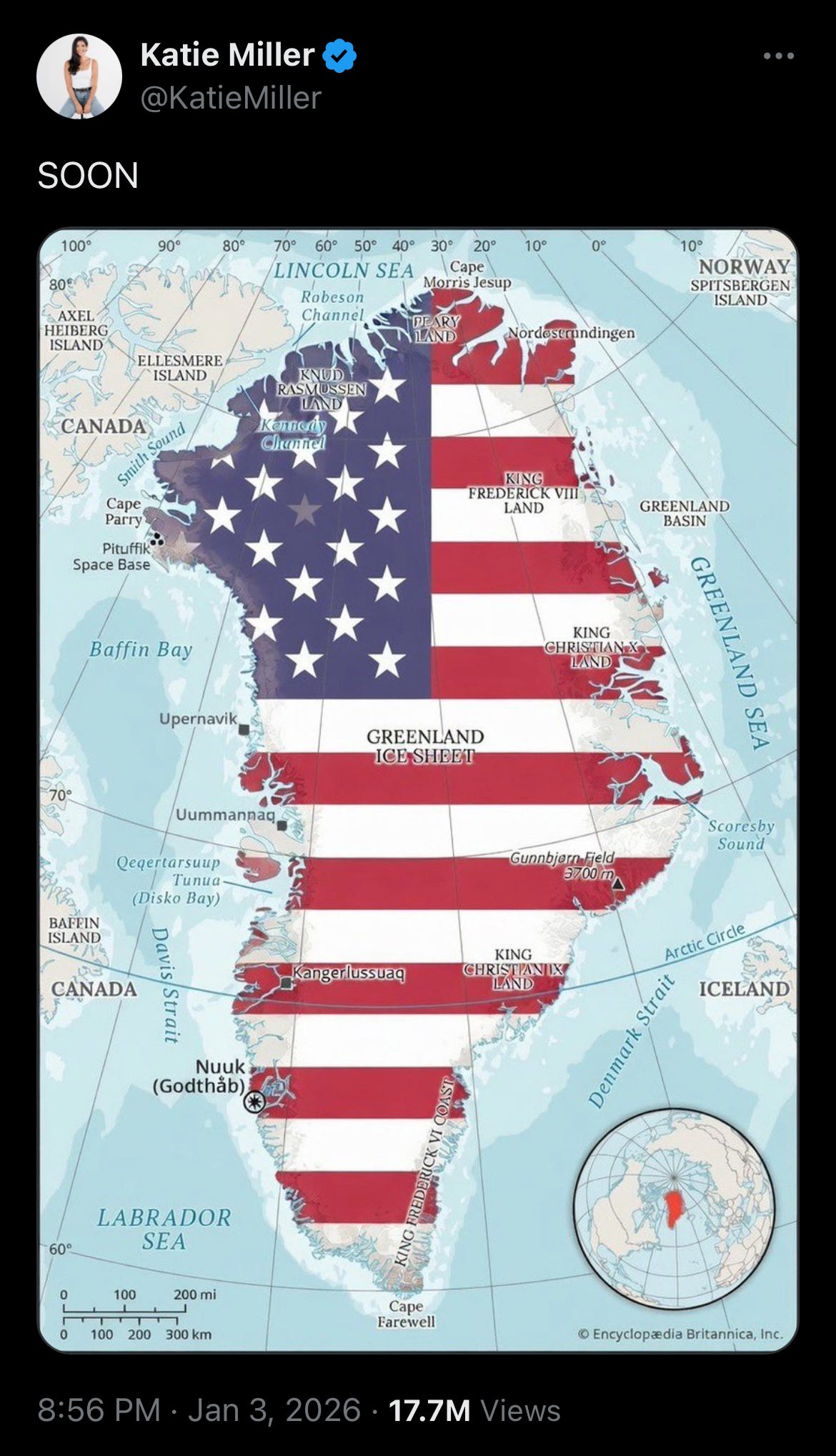
There’s no telling how that process might conclude. But the results could be surprising when or if it does. Weighing the evidence, contemplating the complexity, and moved by its own history, Germany may determine that, actually, American occupation isn’t all that bad.
At least it was a lot simpler.